
CHRISTMAS EVE SERVICES
5:00 PM - Family-friendly service
Stories, songs with guitar accompaniment, and permission to wiggle around a bit. In person only.
8:00 PM - Traditional candlelight service
Lessons and carols with Communion, featuring music from our chancel choir and church orchestra. All are welcome for Communion. In person and live-streamed.
Stories, songs with guitar accompaniment, and permission to wiggle around a bit. In person only.
8:00 PM - Traditional candlelight service
Lessons and carols with Communion, featuring music from our chancel choir and church orchestra. All are welcome for Communion. In person and live-streamed.
resources
Devotional booklet
Readings for each week of Advent. Print copies are available in the Narthex. An electronic version is available from the church office upon request.
Devotional excerpts
An excerpt from the devotional booklet posted each day December 1 through January 6 on CPC’s Facebook and Instagram pages.
Daily Breath Prayer
A word to ponder and a different breath prayer for each day of Advent delivered through notifications from CPC's Mobile App.
Materials to borrow from the CPC Library
Readings for each week of Advent. Print copies are available in the Narthex. An electronic version is available from the church office upon request.
Devotional excerpts
An excerpt from the devotional booklet posted each day December 1 through January 6 on CPC’s Facebook and Instagram pages.
Daily Breath Prayer
A word to ponder and a different breath prayer for each day of Advent delivered through notifications from CPC's Mobile App.
Materials to borrow from the CPC Library
- For Adults - standalone devotionals and holiday fiction.
- For Children - picture books and DVDs for a faith-filled Advent and Christmas.
VIRTUAL ADVENT STUDY
A discussion-based class led by Rev. Alan Bancroft and inspired by the What Do You Fear? devotional online via Zoom Thursdays at 7:30 PM.
A CHRISTMAS PAGEANT
IN FOUR PARTS
This year's Christmas pageant will be presented in four episodes, one per week of Advent, during the Children's Time in our Sunday morning Worship Services. Any child present is welcome to participate. Join us at 10:30 AM in person, livestream, or watch the recording afterwards.
WHAT COLOR ARE YOUR CANDLES?
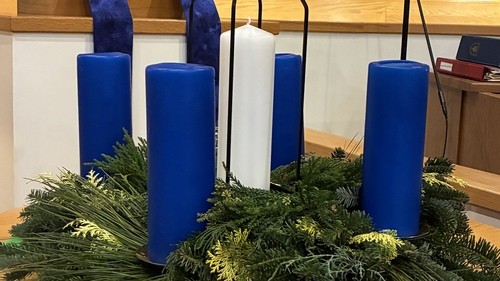
Why does CPC use blue candles for Advent?
Many Christian denominations — Anglican, Lutheran, Reformed, and Catholic (to name a few) — use a color called “Sarum Blue” during Advent. Sarum Blue (sometimes simply called Advent blue) is a deep, rich blue traditionally associated with the medieval Sarum Rite, a liturgical rite developed at Salisbury Cathedral in England. It is not a single standardized shade, but it is typically a dark, slightly purplish or royal blue.
Historically, both Advent and Lent used penitential purple. Over time, churches wanted to highlight that Advent is not primarily about penitence but expectant hope and joyful preparation for Christ’s coming. Blue visually separates Advent from Lent’s more somber penitence, while signaling Advent's character of anticipation, watchfulness, and longing.
Blue has long been associated with:
The return to Sarum Blue for Advent derives from the Sarum liturgical tradition (11th–16th centuries). That tradition marks a time when the church revived Anglo-Catholic and medieval practices in the 19th century. Sarum Blue returned with them and has spread to many Protestant liturgical traditions.
Many Christian denominations — Anglican, Lutheran, Reformed, and Catholic (to name a few) — use a color called “Sarum Blue” during Advent. Sarum Blue (sometimes simply called Advent blue) is a deep, rich blue traditionally associated with the medieval Sarum Rite, a liturgical rite developed at Salisbury Cathedral in England. It is not a single standardized shade, but it is typically a dark, slightly purplish or royal blue.
Historically, both Advent and Lent used penitential purple. Over time, churches wanted to highlight that Advent is not primarily about penitence but expectant hope and joyful preparation for Christ’s coming. Blue visually separates Advent from Lent’s more somber penitence, while signaling Advent's character of anticipation, watchfulness, and longing.
Blue has long been associated with:
- Hope — like the deep blue of the night sky before dawn.
- Mary — who embodies waiting and expectancy in the Advent story.
- Heaven — pointing toward the divine breaking into human history.
The return to Sarum Blue for Advent derives from the Sarum liturgical tradition (11th–16th centuries). That tradition marks a time when the church revived Anglo-Catholic and medieval practices in the 19th century. Sarum Blue returned with them and has spread to many Protestant liturgical traditions.
MORE ABOUT THE ‘WHAT DO YOU FEAR?' THEME
This year's Advent theme, What Do You Fear?, comes from the talented folks at A Sanctified Art. As in previous years, we will be using materials created by them throughout Advent.
Luke’s Gospel begins the story of Jesus with this opening line: “In the time of Herod...” This detail may seem minor to modern readers, however, it reveals layers of information about the fearful world Jesus entered, one filled with rampant oppression, economic disparity, uncertainty, and instability. A world not so unlike our own. And yet, throughout the stories of Christ’s birth, we hear the whispers of angels delivering a surprising message: “Do not fear.” In our own time, we might ask: is it even possible to be fearless in a fearful world? When Mary, Joseph, the shepherds, and the magi are each called into God’s redemptive story, they do not deny their fears—they move through them. They ask questions, hold fast to courage, trust in good news, and say, “Here I am, Lord.” When we find ourselves in fearful times, can we acknowledge our fears while also insisting on hope?
We’ve crafted an Advent series that takes seriously the angels’ message and trusts that Christ’s birth truly is good news of great joy for all people. The series looks closely at the fear and terror looming in the background during the time of King Herod and invites us to consider the fears we hold now. Fear can divide and paralyze us, and even be used as a tool for oppression. But what if we formed a different relationship with fear? Can we acknowledge fear without letting it rule us? Might we catalyze our fears into love and action? What if naming our fears helps us see more clearly how God is breaking in and where God is at work?
This series gently invites us to identify where fear is present—both in the Advent story and in our lives—while also finding our way toward hope, with the angels’ voices in our ears. Every Advent, we light candles, sing carols, and pray for Christ’s coming because we believe God entered a frightened world to bring good news. We hold onto hope because we believe that Christ did come—that’s the promise of the season. Our hope is not flimsy or fleeting. It’s gritty, resilient, and can endure—no matter what we fear or face. This season, let us insist on hope and trust that good news is greater than fear..
Luke’s Gospel begins the story of Jesus with this opening line: “In the time of Herod...” This detail may seem minor to modern readers, however, it reveals layers of information about the fearful world Jesus entered, one filled with rampant oppression, economic disparity, uncertainty, and instability. A world not so unlike our own. And yet, throughout the stories of Christ’s birth, we hear the whispers of angels delivering a surprising message: “Do not fear.” In our own time, we might ask: is it even possible to be fearless in a fearful world? When Mary, Joseph, the shepherds, and the magi are each called into God’s redemptive story, they do not deny their fears—they move through them. They ask questions, hold fast to courage, trust in good news, and say, “Here I am, Lord.” When we find ourselves in fearful times, can we acknowledge our fears while also insisting on hope?
We’ve crafted an Advent series that takes seriously the angels’ message and trusts that Christ’s birth truly is good news of great joy for all people. The series looks closely at the fear and terror looming in the background during the time of King Herod and invites us to consider the fears we hold now. Fear can divide and paralyze us, and even be used as a tool for oppression. But what if we formed a different relationship with fear? Can we acknowledge fear without letting it rule us? Might we catalyze our fears into love and action? What if naming our fears helps us see more clearly how God is breaking in and where God is at work?
This series gently invites us to identify where fear is present—both in the Advent story and in our lives—while also finding our way toward hope, with the angels’ voices in our ears. Every Advent, we light candles, sing carols, and pray for Christ’s coming because we believe God entered a frightened world to bring good news. We hold onto hope because we believe that Christ did come—that’s the promise of the season. Our hope is not flimsy or fleeting. It’s gritty, resilient, and can endure—no matter what we fear or face. This season, let us insist on hope and trust that good news is greater than fear..